
Thurston and the Monarchy
Few names in the history of billiards manufactuing have the heritage of prestige of Thurston & Co Ltd. Reputedly established in 1799 by John Thurston, the company’s history is intrinsically linked with the evolution of the game itself, particularly through major innovations like the introduction of slate beds and vulcanized rubber cushions.
However, the enduring symbol of Thurston’s esteemed place in British society is its long association with the Monarchy, marked by a series of significant Royal appointments spanning two centuries.
Georgian Foundations
The connection between Thurston and the Royal Family began in the earliest days of the business, well before billiard table manufacturing was widely recognized as a specialized craft.
King George IV, reigned 1820 – 1830
John Thurston successfully supplied billiard tables to King George IV in the early 19th century. This relationship culminated in Thurston being awarded a coveted royal warrant in 1826. Table plates produced during this period incorporated the royal coat of arms and proudly displayed the words “Manufacturer to his Majesty”.
Thurston also supplied accessories and tables to the King’s estranged wife, Queen Caroline, when she was in residence at Greenwich.
Following the King’s death in 1830, Thurston updated the inscription on its plates to reflect the transition, reading “Manufacturer to his late Majesty”.
King William IV reigned 1830 – 1837
The tradition of Royal endorsement continued when Thurston was awarded the royal warrant of William IV in 1833.
The Victorian Golden Age
Queen Victoria reigned 1837 – 1901
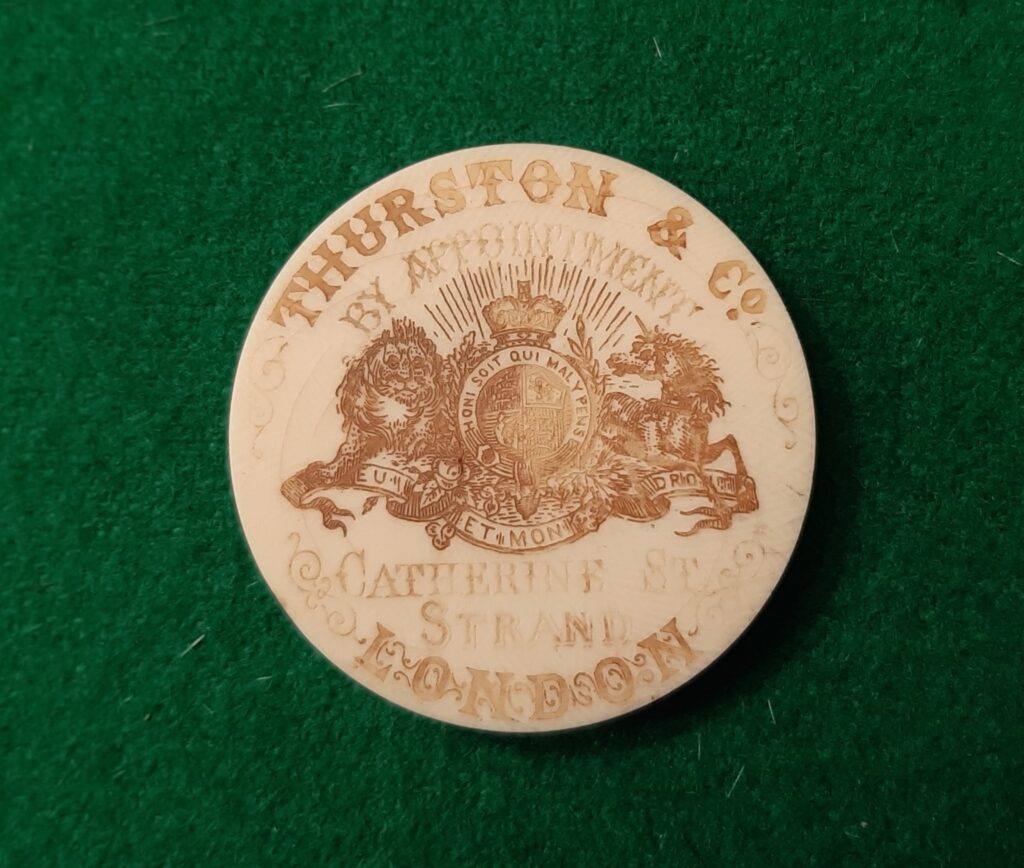
The reign of Queen Victoria was pivotal in establishing billiards as a respectable pursuit among the prosperous members of society. Thurston’s most famous tables and innovations cemented their status during this era.
Thurston received the royal warrant of Queen Victoria in 1837, with new plates thereafter reading “Manufacturer to her Majesty”. Her interest in the game was already established, having been noted playing billiards as a young princess in 1832.
A particularly notable commission was the full size billiard table Queen Victoria purchased in 1838. The “Royal George Table” was constructed from salvaged oak taken from the sunken H M Man-of-War “Royal George” and was erected at Windsor Castle and remained there until 1936.
Technological improvements were also delivered directly to the Monarchy. The first set of vulcanized rubber cushions, based on Thurston’s 1845 patent were supplied to Queen Victoria, fitted as an upgrade to the Windsor Castle table on October 15, 1845.
Thurston supplied another billiard table to Queen Victoria for Buckingham Palace in 1840.
In the 1850s, Thurston collaborated with E G Magnus, the famous slate specialist, to supply an ornate slate-framed table to Queen Victoria at Osborne House on the Isle of Wight. This table used light grey slate that was enamelled and painted, reportedly to the design specifications of Prince Albert.
In 1851, Thurston exhibited a table at the Great Exhibition in Hyde Park, London, receiving a Gold Medal, the certificate for which was signed personally by Prince Albert.
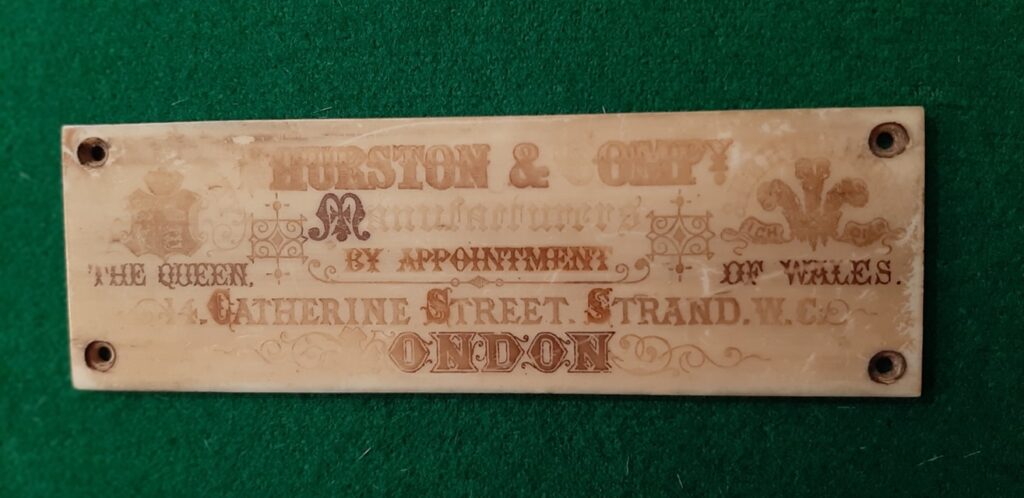
The future King Edward VII, while still Prince of Wales, granted his own warrant to Thurston around 1863, consequently, later Victorian table plates (produced between 1875 and 1896) frequently incorporated warrants for both Queen Victoria and the Prince of Wales.
The 20th Century
The tradition of Royal Warrants continued into the 20th century, further cementing Thurston’s role as a leading supplier of billiard equipment, especially to overseas markets and military units.
King Edward VII reigned 1901 – 1910
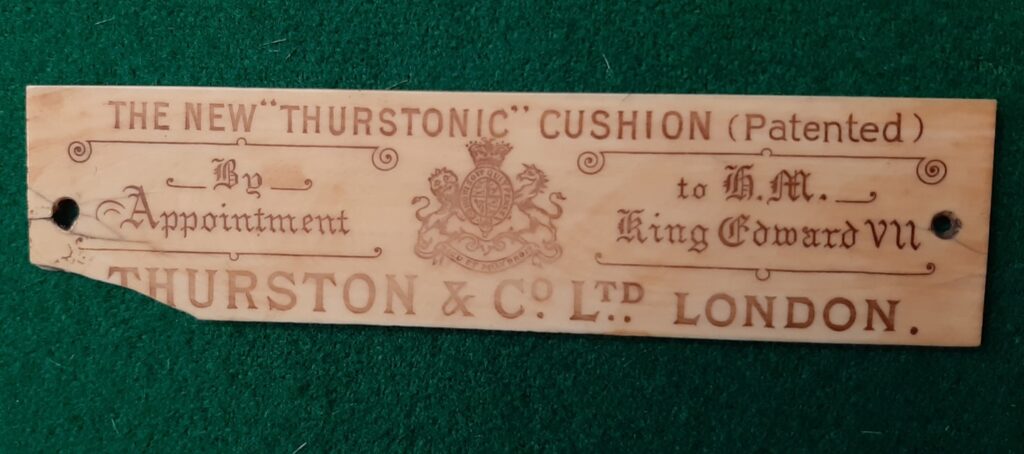
Following the death of Queen Victoria, plates produced during the reign of King Edward VII displayed his new warrant. These plates sometimes used specific terminology, such as “By Special Appointment to H M the King” or “By Special Appointment to His Majesty King Edward VII”.
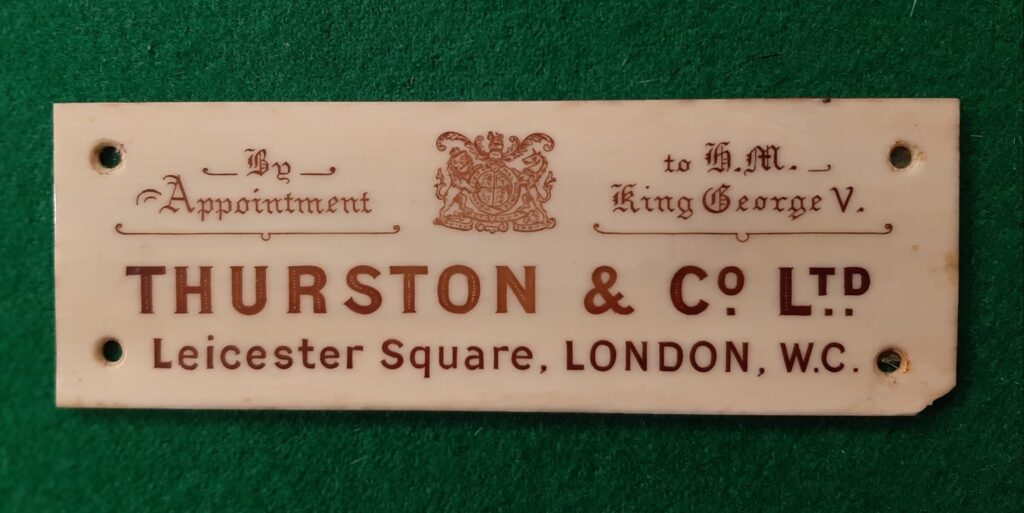
King George V reigned 1910 – 1936
Thurston began referencing the warrant of King George V on table plates starting around 1910. This warrant remained a symbol of quality throughout his reign, and even after his death in 1936.
During World War 2 when manufacturing was severely limited even plates fitted to refurbished tables proudly referred to the appointment to “his late Majesty King George V”.
The multitude of appointments, from the early Georgian era through to the mid-20th century, shows the high quality and reputation of Thurston & Co Ltd and today the name Thurston remains synonymous with the finest billiards craftsmanship.
John A Smith
Cues n Views
Related posts
-

Magnus Billiard Tables
Mr George Eugene Magnus who was born in 1801, he spent some time in the Potteries area of Staffordshire…
Related video posts
-

Thurston – Heritage Collection
Cues n Views visits Thurston, Liverpool to meet Peter Clare and see the Norman Clare Billiard & Snooker Collection.…


